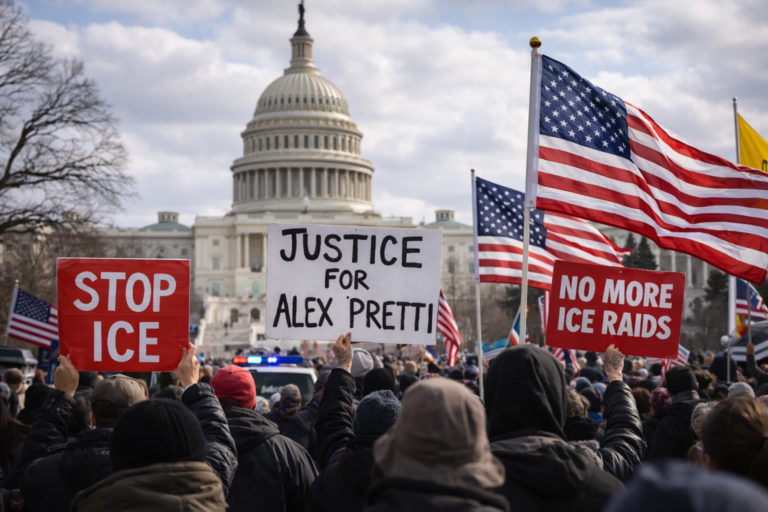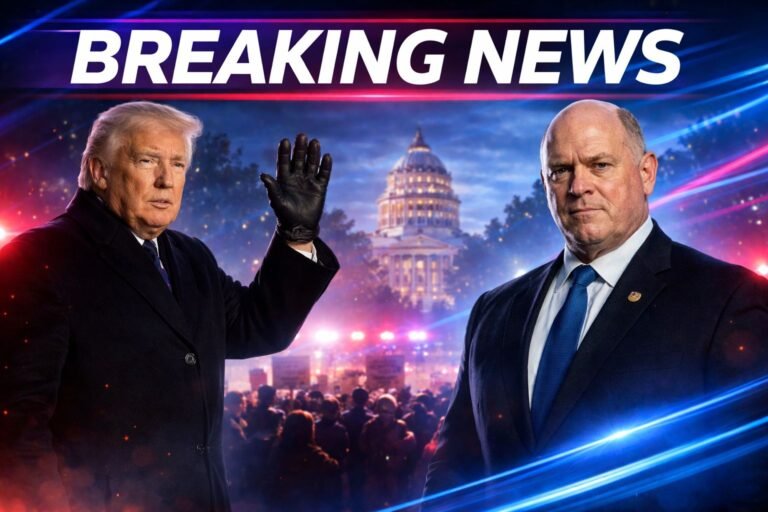
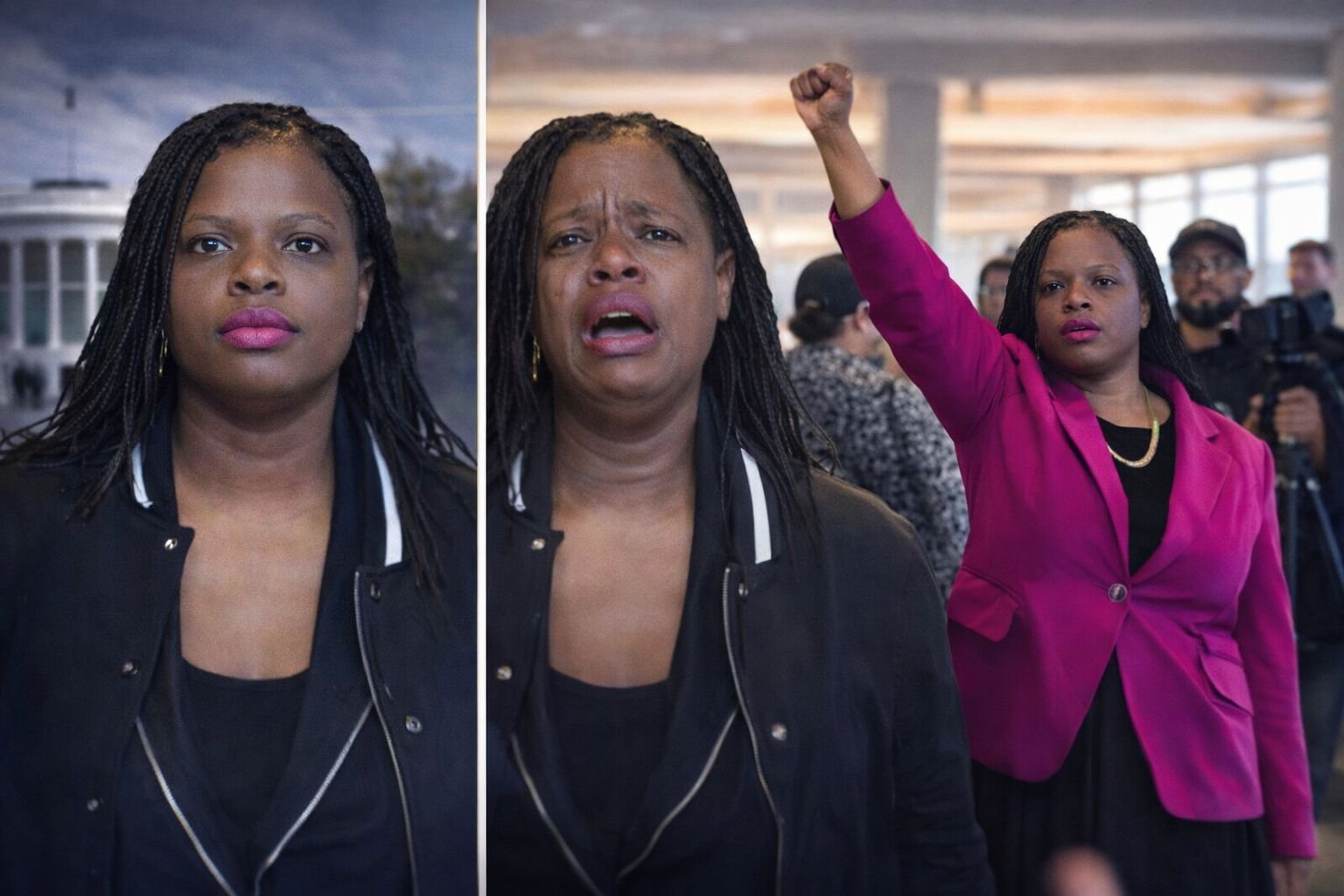
January 22, 2026 — Washington, D.C. — A photograph taken during an immigration protest near the White House has become the focus of national attention after questions emerged about whether the image was digitally altered, prompting responses from activists, media outlets, and federal officials.
The image centers on Nekima Armstrong, a Minnesota based civil rights attorney and activist, who was photographed during a protest against Immigration and Customs Enforcement policies held earlier this week near the White House.
How the controversy began
The photograph, which circulated widely online, showed Armstrong appearing to be holding a sign during the demonstration. Shortly after its release, observers raised concerns that the image may have been altered from the original version.
Media reviews later confirmed that a version of the photo had been edited before distribution, changing the appearance of what Armstrong was holding. The altered image spread rapidly across social media platforms before corrections were issued.
Arrest and protest details
The demonstration took place during a protest targeting ICE policies and enforcement actions. According to verified reports, Armstrong was briefly arrested during the protest along with other demonstrators. Video footage from the scene shows law enforcement officers detaining participants outside a church near the White House.
Armstrong was later released. Authorities said the arrests were related to protest activity in restricted areas and emphasized that the incident did not involve violence.
Clarification and response
After questions surfaced about the photo, Armstrong publicly addressed the issue, stating that the circulated image did not accurately represent the original scene. She emphasized that she did not create or distribute the altered version and criticized its spread as misleading.
News organizations that initially shared the image issued updates clarifying that the photograph had been digitally modified and removed the altered version from their platforms.
Broader implications
The incident has renewed debate about the role of manipulated images in political discourse, particularly during high profile protests. Media ethics experts note that even minor visual alterations can significantly change public perception and stress the importance of verification before publication.
Federal officials did not comment directly on the altered image but reiterated existing policies regarding protests near federal property and the handling of demonstrators.
Ongoing developments
As of Thursday, no charges related to image manipulation have been announced. The protest itself remains under review, and advocacy groups continue to call for greater transparency in how protest imagery is shared and verified.
The situation continues to draw attention as discussions about protest rights, media responsibility, and digital misinformation intersect at the national level.